
A Name Is Not an Introduction: A Vendor Connection Playbook for Orlando and Tampa Agents
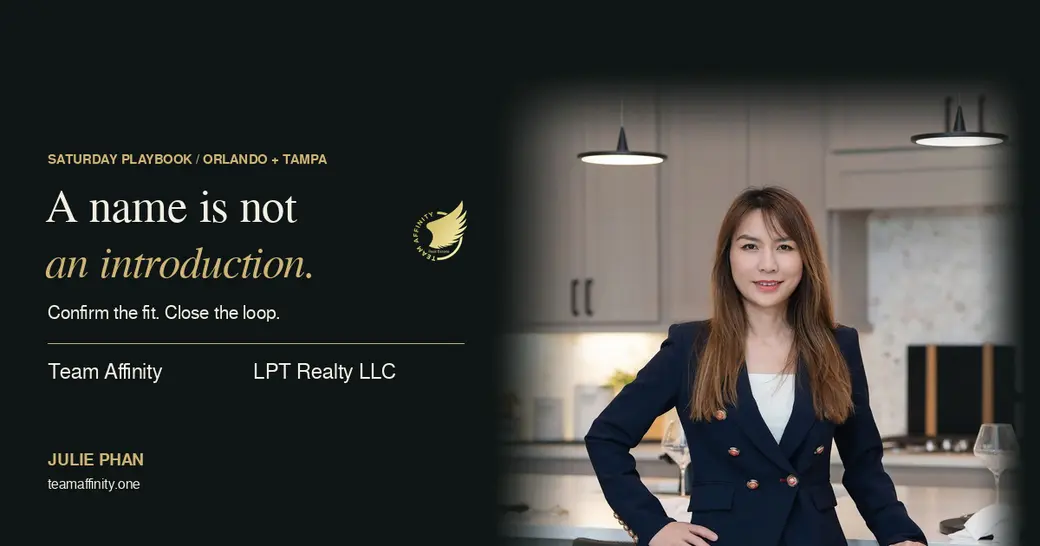
A client asks for a painter. You send a name. A week later, the client is still waiting for a reply—and your helpful introduction has become another loose end. The problem is not always the provider. Sometimes nobody agreed on the job, the location, the timing, or who would make the next call.
For Orlando and Tampa agents, a useful vendor list should be more than a collection of phone numbers. This Saturday Business Playbook proposes a practical introduction workflow: define the request, confirm the fit, ask permission, and close the loop. It is an organizational framework, not a guarantee of anyone’s work or a substitute for the client’s own review.
A name is not a complete introduction
Before looking through contacts, ask what the client actually needs. “Help getting ready to sell” might mean cleaning, paint touch-ups, a repair evaluation, or moving furniture. Those are different requests. Ask for the property’s general location, the desired outcome, the preferred contact method, and the target timing. Record what is known and what still needs clarification.
Use plain language rather than diagnosing a technical problem. An agent can relay that a client noticed a ceiling stain; the agent should not label its cause or prescribe a repair. A suitably qualified professional should evaluate the issue. Keep that boundary visible in the introduction itself, not buried in a later disclaimer.
Build a useful record, not a “best vendors” ranking
The National Association of REALTORS® offers a service-provider contact worksheet as a starting point for organizing home-related contacts. Our suggested extension is to add context beside each name rather than imply that inclusion certifies quality.
- Scope: What type of request does this business accept?
- Service area: Which cities or ZIP codes has the business actually confirmed?
- Contact: Who handles new inquiries, and by which channel?
- Verification: What was checked, where, and on what date?
- Availability: Confirm for this request; do not recycle last month’s answer.
- Language: Record a stated communication preference or confirmed language capability, not an assumption based on a name.
Keep factual notes separate from impressions. “Client reported a returned call the next morning” is more useful than “always responsive.” Label feedback as feedback and retain its date. Do not turn one successful job into a promise about the next one.
Check the address and the actual work
For an Orlando or Tampa request, use the actual service location rather than assume a business covers the whole metro. Ask whether the provider handles that address, that job type, and that timing. A willing introduction is not a confirmed appointment. Have the client and provider agree directly on access and scheduling.
For work requiring a professional license, use the appropriate official verification resource. Florida’s Department of Business and Professional Regulation online services includes a license-verification tool. Match the relevant person or business rather than relying on a business-card description. A license lookup is one check—not proof of availability, insurance coverage, workmanship, price, or suitability for every project.
If the scope or licensing question is unclear, ask the appropriate regulator or qualified professional. Keep contracts, technical specifications, insurance questions, and payment arrangements between the client and the relevant professionals. Review any business relationships or referral arrangements with your broker before making recommendations.
Ask permission before sharing the client’s details
Offer contact information first. If the client wants a direct introduction, ask which details may be shared. Start with only the information needed to establish fit. A provider does not need the client’s financing documents, motivation for selling, travel itinerary, or an entire transaction file to discuss a basic service request.
A suggested message—not a quotation from a real client—might read: “Would you like the contact details so you can reach out yourself, or would you prefer an introduction? If you want me to connect you, may I share your name, preferred contact method, general location, and a short description of the request?” Let the client choose.
Make the next action unmistakable
After permission, send a short introduction with the agreed scope and a clear next step. For example: “This client would like to discuss interior painting in Tampa. Please confirm whether you serve the location and can discuss the proposed timing. The client will review scope, pricing, and terms with you directly.” Do not state that the job is booked or that a price is approved.
In your existing CRM, record the introduction date and create one follow-up task. Ask the client whether contact happened and whether another option would help. Avoid becoming a second scheduling desk unless you explicitly agreed to that role. If the provider cannot help, mark that outcome rather than quietly leaving the introduction open.
Use Saturday to test one real workflow
Choose one service category your clients ask about. Review its contact records, remove unsupported praise, flag information that needs refreshing, and practice the permission message. Then examine one recent introduction: was the request clear, did someone own the next step, and was the outcome recorded? Improve the process before expanding the list. A smaller, current resource is preferable to a large directory nobody maintains.
Tóm tắt bằng tiếng Việt
Khách cần người sơn nhà, dọn dẹp hay xem xét một hạng mục sửa chữa? Đừng chỉ gửi một số điện thoại rồi xem như đã xong. Trước hết, hỏi rõ khách cần làm gì, nhà ở khu vực nào, mong muốn thời gian ra sao và muốn được liên hệ bằng cách nào.
Nếu khách muốn được giới thiệu trực tiếp, hãy xin phép trước khi chia sẻ thông tin. Chỉ gửi những chi tiết cần thiết. Không tự kết luận nguyên nhân hư hỏng, hứa giá, hứa lịch làm hoặc bảo đảm chất lượng thay cho bên cung cấp dịch vụ. Với công việc cần giấy phép chuyên môn, hướng dẫn khách kiểm tra qua cơ quan phù hợp.
Sau khi kết nối, ghi lại một việc cần theo dõi trong CRM: hai bên đã liên lạc được chưa, khách có cần lựa chọn khác không? Khách vẫn là người trao đổi và quyết định về phạm vi công việc, chi phí và điều khoản. Một lời giới thiệu tốt giúp khách có bước tiếp theo rõ ràng, chứ không quyết định thay khách.
Frequently asked questions
Should an agent guarantee a recommended provider?
No. Explain what information you can substantiate and what the client still needs to review. An introduction should not be presented as a warranty.
What if the provider does not respond?
Confirm the client’s preferred next step. Offer another contact if available, and update the original record with the observed outcome rather than an unsupported judgment.
Can clients choose their own provider?
Keep the introduction optional. The purpose of this workflow is to help clients compare and communicate—not pressure them to select someone from the agent’s list.
Local guidance, with a clear next step
Looking for a Vietnamese Real Estate Agent in Orlando & Tampa? Team Affinity offers Vietnamese-language real-estate guidance. If your search begins with “Vietnamese Realtor Orlando Tampa,” start with the question you need answered. Connect with a Vietnamese Realtor serving Orlando and Tampa, or explore our Vietnamese Realtor in Orlando guide.
Team Affinity - LPT Realty LLC
Orlando: Phat Nguyen — 407.502.4909
Tampa: Julie Phan — 813.295.7424
General educational information only; not legal, tax, mortgage, financial, or contractor advice. Consult the appropriate licensed professional for your situation. The workflow above is a suggested practice, not a claim about a specific provider.
Categories
- All Blogs (85)
- Agent Development (14)
- Community Spotlight (9)
- First-Time Buyers (20)
- Local Guides (5)
- Market Updates (2)
- New Construction (1)
- Orlando Local Spotlight (4)
- Orlando Real Estate (40)
- Real Estate Business (12)
- Relocation to Florida (6)
- Selling Your Home (6)
- Tampa Real Estate (37)
- Team Affinity (14)
- Vietnamese Community (7)
- Vietnamese Homebuyer Guide (7)
Recent Posts