Love the Kitchen. Picture Dinner: A Meal Walk-Through for Orlando and Tampa Homebuyers
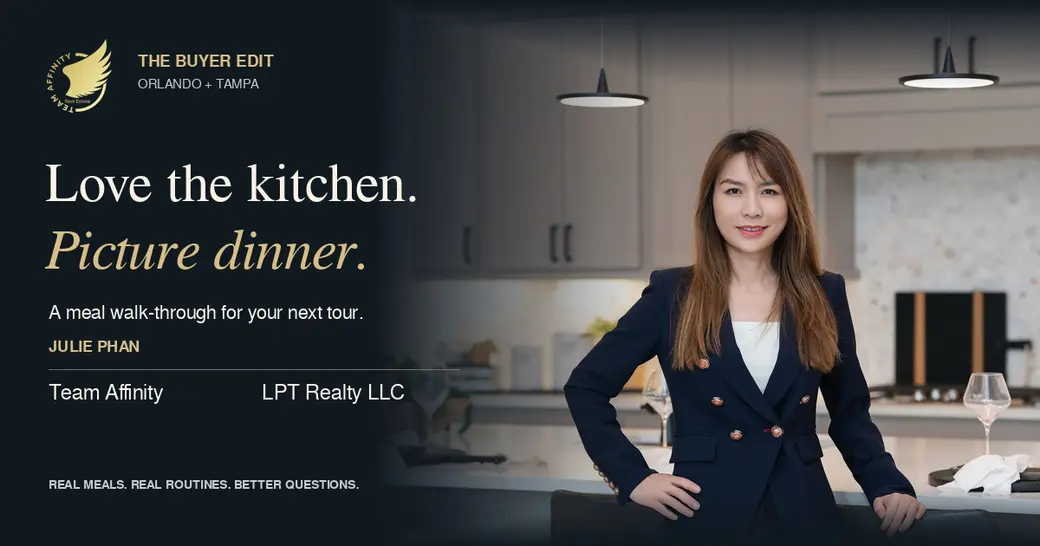
A beautiful kitchen can win your attention before you have imagined making a meal in it. The island looks generous. The finishes photograph well. But where would you set a cutting board, put the plates and place a serving dish while someone else is getting a glass of water?
For an Orlando or Tampa home search, try adding a meal walk-through to your next showing. This is our suggested planning exercise, not a technical inspection: picture one familiar meal and follow its tasks through the kitchen. You are testing your preferences against the layout, not declaring that one kitchen design is right for everyone.
Start with dinner you actually make
Choose a meal from your ordinary week, not the elaborate dinner you might cook once a year. Write down what happens: ingredients come out, produce gets washed, food gets prepared, dishes come out and cleanup begins. Include your real habits, whether you cook from scratch, assemble something simple or usually bring food home.
Keep the exercise concrete. “We need a functional kitchen” is hard to compare. “I want a place to prepare food without moving the coffee setup every evening” gives you something visible to discuss. If two people commonly use the room, each can describe a task rather than assuming they want the same arrangement.
Find your preparation space before counting counters
During the showing, identify where you would actually work. Which surface would you choose for a cutting board? Where would ingredients wait? Which appliances would you normally leave out? A large amount of countertop is not automatically the same as the open workspace you personally want.
Use the space as presented, but separate the property from the staging. A clear counter in a photograph does not show where your own everyday equipment would live. Note your proposed locations without deciding immediately that a renovation is needed. Sometimes your question is about organizing belongings; sometimes it is about the layout.
Respect the seller’s property. Ask your agent before opening storage areas or taking measurements, and do not operate equipment or move personal items without permission. A visual planning exercise should stay within the showing arrangements.
Picture the second person—not just the cook
Now add a second activity. Someone wants a drink. Another person is setting the table. You are putting food into a serving dish. Ask where you would each stand and which paths you would use. If you usually cook alone, picture your own sequence between those tasks instead.
For a hypothetical example, two kitchens might both have an island. In one, you might prefer to prepare food there while another person uses a different counter. In the other, your chosen preparation spot may also be where everyone reaches for cups. Neither observation settles the decision. It tells you what to revisit.
Avoid turning this into a universal clearance or safety test. If a dimension, accessibility need, appliance installation or proposed alteration matters to your decision, ask the appropriate qualified professional to evaluate it. Your showing notes should identify the question, not pretend to supply a technical answer.
Follow the meal beyond the cooking surface
Picture taking food to the place where you normally eat. Where would a hot dish be set down? Where would plates wait? If your routine includes packing lunches, making tea or serving several dishes together, include that step. Describe the routine in your own words rather than borrowing someone else’s ideal kitchen checklist.
Then picture cleanup. Identify where used dishes would go and where clean items would be put away. Ask whether the locations you have imagined fit the way you want to use the room. Do not open or test appliances to prove the idea during an ordinary showing.
This is also a useful moment to distinguish appearance from transaction facts. If your plan depends on a particular appliance or movable island, ask your agent to verify its status through the appropriate listing and transaction documents. Do not treat an item’s presence in a photo as an answer about what comes with the home.
Give each kitchen a short, useful note
After the showing, write three sentences: the task that felt easy to picture, the task that needs another look and the question that needs a verified answer. Keep observations separate from assumptions. “I pictured meal preparation beside the sink” is different from “this kitchen will need new cabinets.”
On a later visit, return to the unresolved point instead of restarting the entire exercise. If you need dimensions, arrange an appropriate measurement opportunity. If you are considering changes, seek property-specific input before treating the idea as feasible or assigning it a cost.
Compare homes using the same familiar meal. The aim is not to score every drawer. It is to make the kitchen discussion more personal and more useful: what do you want to do here, what can you observe and what still needs to be checked?
Frequently asked questions
Does this replace a home inspection?
No. This is a preference and routine exercise. It does not establish appliance condition, installation quality, code compliance or the feasibility of changes. Keep those questions with the appropriate professionals.
What if I do not cook often?
Use your actual routine: making breakfast, preparing drinks, unpacking takeout or putting dishes away. A kitchen does not have to serve an imagined lifestyle to be worth evaluating thoughtfully.
Should I reject a home if one task feels awkward?
Not automatically. Record the concern, consider how important it is to you and seek the missing information. One observation is a conversation point, not a complete buying decision.
Tóm tắt bằng tiếng Việt
Bếp đẹp chưa chắc đã hợp với cách bạn sinh hoạt. Khi xem nhà ở Orlando hoặc Tampa, hãy thử hình dung một bữa ăn quen thuộc: lấy nguyên liệu, chuẩn bị, nấu, dọn ra bàn rồi rửa và cất chén đĩa. Bạn sẽ làm từng việc ở đâu?
Nếu thường có hai người cùng dùng bếp, hãy nghĩ đến lúc một người chuẩn bị đồ ăn còn người kia lấy nước hoặc dọn bàn. Đừng chỉ đếm mặt bàn hay ngăn tủ. Hãy xem cách bố trí có hợp với thói quen của chính mình không.
Sau buổi xem, ghi lại điều dễ hình dung, điểm muốn xem lại và câu hỏi cần xác minh. Xin phép trước khi mở tủ, đo đạc hoặc sử dụng thiết bị. Bài tập này giúp bạn hiểu nhu cầu của mình, không thay thế việc kiểm tra nhà hay đánh giá chuyên môn.
Bring your real routine to the home search
Looking for a Vietnamese Real Estate Agent in Orlando & Tampa? A Vietnamese Realtor serving Orlando and Tampa can help you organize the questions that matter to your home search. Team Affinity offers guidance in English and Vietnamese. If you searched “Vietnamese Realtor Orlando Tampa,” start with the way you actually want to live—not just the features that photograph well.
Orlando: Phat Nguyen 407.502.4909. Tampa: Julie Phan 813.295.7424.
Team Affinity - LPT Realty LLC.
General educational information, not legal, tax, mortgage, financial, inspection or design advice. Consult the appropriate qualified professional about property-specific questions.
Categories
- All Blogs (127)
- Agent Development (14)
- Community Spotlight (9)
- First-Time Buyers (21)
- Local Guides (5)
- Market Updates (2)
- New Construction (1)
- Orlando Local Spotlight (4)
- Orlando Real Estate (79)
- Real Estate Business (12)
- Relocation to Florida (6)
- Selling Your Home (6)
- Tampa Real Estate (75)
- Team Affinity (36)
- Vietnamese Community (7)
- Vietnamese Homebuyer Guide (7)
Recent Posts