Open House Conversion: A 48-Hour Follow-Up Playbook for Real Estate Agents
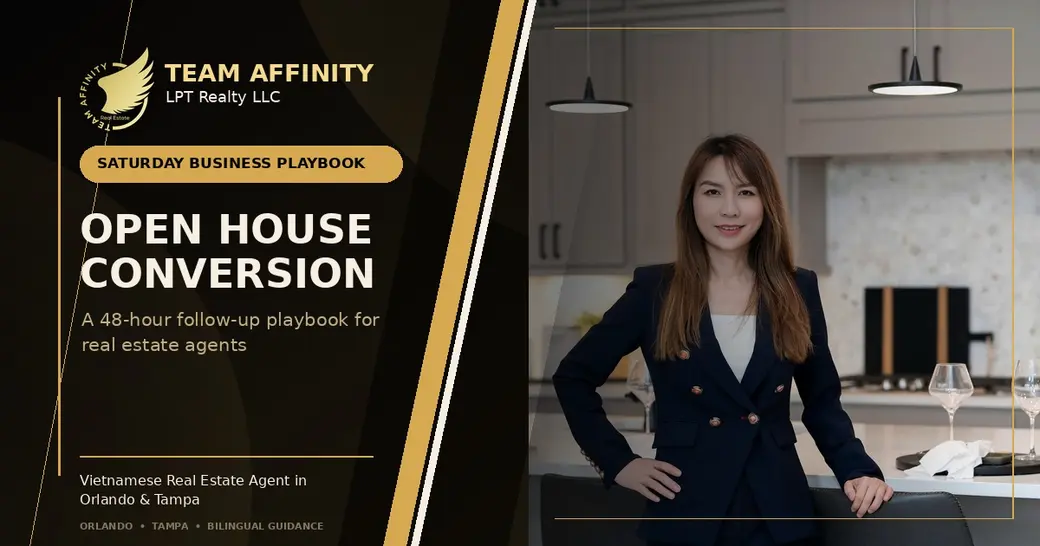
An open house can create visibility, seller feedback and new buyer conversations—but only when the agent has a system for what happens after the door closes. The common mistake is treating attendance as the result. Attendance is only the starting point. The real business outcome is a clear next step with the people who want help.
This 48-hour open house follow-up playbook gives real estate agents a practical process for preparation, conversation, prioritization and follow-through. It is designed to be simple enough to run every weekend and structured enough for a team leader to coach.
1. Define the business objective before promoting the event
Create the follow-up fields before the first visitor arrives. At minimum, track the visitor’s name, preferred contact method, timeframe, whether they already have agent representation, the feature they liked most, the main concern they raised and the next action you promised. If the team cannot see the next action, the contact will probably become another forgotten name in the CRM.
2. Use a clear, respectful sign-in process
Explain why you are requesting information instead of placing a form at the door with no context. A simple introduction works: “The seller has asked us to track attendance. I can also send the property details and answer any questions after your visit. What is the best way to reach you?”
3. Replace the sales interrogation with three useful questions
Strong open house conversations feel helpful, not scripted. Use three questions to understand the visitor’s situation:
- What brought you to this home today? This reveals whether the visitor is actively searching, comparing the neighborhood, helping someone else or simply curious.
- What would this home need to have for it to be a real possibility? This surfaces decision criteria without pushing for an immediate commitment.
- What would be most useful after you leave? The answer may be disclosures, comparable homes, financing questions for a licensed lender, another showing or no follow-up at all.
Write down the answer to the third question immediately. It becomes the reason for your follow-up, so the message can be relevant instead of generic.
4. Sort visitors into three practical follow-up groups
Do not label every visitor a “hot lead.” Use behavior and stated needs, not assumptions.
- Ready for a specific next step: requested a private showing, property documents, a lender introduction or comparable options.
- Interested but still comparing: has a possible timeframe and criteria but needs more information or is early in the process.
- Information only: did not request ongoing help, is already represented or prefers not to be contacted.
This simple sorting protects the agent’s time and helps the team honor the visitor’s wishes. It also prevents aggressive follow-up that can damage trust.
5. Run a 10-minute reset immediately after the event
Before driving away, take ten minutes to finish notes while the conversations are fresh. Confirm that every promised item has an owner and deadline. Separate listing feedback from buyer opportunity notes. Record objective comments about the property—such as layout, condition or price response—without making personal judgments about visitors.
6. Send the first follow-up within two hours
The first message should prove that you listened. Keep it short and deliver the item promised.
Thank you for visiting the open house today. You mentioned that [specific feature or question] matters in your search. Here is [the requested information]. If it would help, I can also prepare [one relevant next step].
Avoid “Just checking in.” The visitor should immediately understand why the message is useful. If someone asked for no follow-up, document that preference and stop.
7. Add value at 24 hours—not pressure
The next-day message should help the visitor make a decision. For a buyer, that might be two or three comparable active homes, a checklist for evaluating condition, or an invitation to ask a licensed lender about financing scenarios. For a nearby homeowner, it might be a concise explanation of the open house response and an offer to discuss a future selling timeline.
8. Ask for a clear decision at 48 hours
By the second day, ask a low-pressure question that allows an honest answer:
After comparing the home with your priorities, would you like to see it again, review similar options or pause for now?
All three answers are useful. “See it again” creates an appointment. “Review similar options” clarifies the search. “Pause” helps you update the CRM and choose an appropriate nurture plan instead of repeatedly chasing someone who is not ready.
9. Use a five-number open house scorecard
After every event, track the same five numbers: total visitor groups, meaningful real estate conversations, promised follow-up items delivered, appointments requested and contacts placed into an appropriate nurture path. Review these numbers weekly.
The scorecard is not a promise of conversion. It is a coaching tool. If attendance is low, review promotion and signage. If conversations are high but next steps are low, coach the questions and offer. If appointments are set but not kept, improve confirmation and expectation-setting. One weak stage should not cause the team to abandon the entire strategy.
10. Build safety and fair housing into the system
Open house performance never comes before safety or equal professional service. The National Association of REALTORS® open house resource emphasizes planning for safety, securing valuables and sensitive items, and maintaining awareness during the event. Agents should follow brokerage procedures, use a check-in plan and avoid closing the property alone when local safety protocols call for support.
Use consistent questions and service standards with every visitor. Avoid comments or notes based on protected characteristics, neighborhood “fit” or assumptions about who should live in an area. NAR maintains additional fair housing education and resources for real estate professionals.
Mẹo thực hành bằng tiếng Việt
Đừng chỉ hỏi “Anh/chị có thích căn nhà không?” Hãy hỏi ba câu rõ ràng: “Điều gì quan trọng nhất khi anh/chị chọn nhà?”, “Anh/chị còn băn khoăn điều gì?” và “Sau buổi xem nhà, thông tin nào sẽ hữu ích nhất?” Sau đó, gửi đúng thông tin đã hứa trong ngày. Cách làm này giúp cuộc trò chuyện tự nhiên, tôn trọng và dễ tạo bước tiếp theo.
Frequently asked questions
How soon should a real estate agent follow up after an open house?
Send the promised information as soon as practical, ideally while the visit is still fresh. A useful first message within a few hours is usually stronger than a generic message several days later.
What should an open house follow-up message include?
Reference one detail from the conversation, deliver the requested information and offer one relevant next step. Keep the message easy to answer.
Should every visitor receive the same automated campaign?
No. Match the follow-up to the visitor’s stated interest, timing, representation status and communication permission. Some contacts need an immediate action, some need light nurturing and some should not receive ongoing follow-up.
What is the best open house conversion metric?
No single metric explains performance. Track attendance, meaningful conversations, completed promises, appointments and appropriate nurture placements. The pattern shows where the process needs coaching.
How can bilingual service improve an open house conversation?
Clear language can make it easier for clients to explain priorities and ask questions. Bilingual service should support understanding while applying the same professional, fair and respectful process to every visitor.
Build the process, then coach the process
The strongest open house system is not the one with the most complicated software. It is the one the agent can repeat: prepare the fields, ask useful questions, document the next step, deliver value and review the scorecard. Consistency gives leaders something observable to coach and gives visitors a more professional experience.
Team Affinity - LPT Realty LLC shares practical business-development guidance for agents and clear bilingual real estate support for consumers. For Orlando, contact Phat Nguyen at 407.502.4909. For Tampa, contact Julie Phan at 813.295.7424, or email info@teamaffinity.one.
Team Affinity is a resource for clients seeking a Vietnamese Real Estate Agent in Orlando & Tampa or a Vietnamese Realtor in Orlando & Tampa.
This article is for general educational purposes only and should not be considered legal, tax, mortgage, financial or brokerage-policy advice. Real estate professionals should follow applicable laws, licensing requirements and their brokerage’s policies.
Sources and further reading
Categories
- All Blogs (122)
- Agent Development (14)
- Community Spotlight (9)
- First-Time Buyers (20)
- Local Guides (5)
- Market Updates (2)
- New Construction (1)
- Orlando Local Spotlight (4)
- Orlando Real Estate (75)
- Real Estate Business (12)
- Relocation to Florida (6)
- Selling Your Home (6)
- Tampa Real Estate (71)
- Team Affinity (36)
- Vietnamese Community (7)
- Vietnamese Homebuyer Guide (7)
Recent Posts