A Practical Follow-Up System for Real Estate Agents Who Want More Real Conversations
Most real estate agents do not lose business because they are lazy. They lose business because their follow-up is unclear, inconsistent, or too dependent on memory. A buyer asks a question at an open house. A seller says they may list in six months. A past client mentions a coworker who is moving. The agent means to follow up, but the day gets filled with showings, inspections, transaction deadlines, family obligations, and new leads.
A practical follow-up system fixes that. It does not need to be complicated, expensive, or robotic. It needs to help you remember the right people, say something useful, and keep the relationship moving without pressure. Team Affinity - LPT Realty LLC teaches agents to think of follow-up as client service, not chasing. That mindset matters whether you are building your database in Orlando, growing referrals in Tampa, or serving bilingual clients across Florida real estate.
Start with the real goal: a better conversation
The point of follow-up is not to force every person into an appointment immediately. The point is to continue a relevant conversation. A new online lead may need basic education. A past client may appreciate a homeowner reminder. A seller lead may need a market-prep checklist. A buyer who speaks Vietnamese may simply want someone patient enough to explain the process clearly.
When agents treat every lead the same, follow-up becomes generic. When agents organize people by situation, follow-up becomes useful. Useful follow-up earns replies because it respects timing, budget, questions, and decision stage.
Build four simple lead stages
A strong system starts with simple categories. Do not overbuild it. Most agents can run their week from four stages:
- New conversation: someone who recently registered, called, messaged, visited an open house, or asked a question.
- Active opportunity: someone who is actively touring, preparing to list, interviewing agents, or discussing a timeline.
- Nurture: someone with a future timeline, unclear motivation, or early-stage questions.
- Past client/referral partner: someone who already knows you and should hear from you regularly with value.
These stages help you decide what to do next. A new conversation needs speed and clarity. An active opportunity needs a defined next step. A nurture contact needs useful education. A past client needs relationship care, not a sales pitch every month.
Use a three-touch opening sequence
Many agents call once, text once, and then mentally move on. A better opening sequence gives the client a few respectful chances to respond in the channel they prefer. For example:
- Touch 1: respond quickly with a clear question tied to their inquiry.
- Touch 2: send one helpful resource, such as a buyer checklist, seller prep guide, or local search link.
- Touch 3: follow up with a simple choice: “Would it help if I sent options, or are you still just researching?”
This works because it lowers pressure. The person can say yes, not yet, or just researching. Every answer gives you a better next step. Agents should also follow all applicable communication rules, brokerage policies, opt-out requests, and platform requirements. This article is educational and not legal advice.
Create follow-up reasons before you need them
The hardest time to write follow-up is when you are tired and staring at a blank screen. Prepare a small library of reasons to reach out. Good examples include a new listing match, a price change, a neighborhood market update, a home maintenance reminder, an open house invitation, a closing anniversary note, a homeowner equity check-in, or a simple “Are your plans still the same?” message.
For agent development, this is where discipline beats motivation. If you have ten useful reasons ready, you are more likely to follow up consistently. If every message must be invented from scratch, the system will eventually break.
Make your CRM tell you what to do today
A CRM should not be a storage cabinet. It should be a daily workbench. Every serious contact should have a next action date, a category, and a note that explains context. “Buyer lead” is not enough. “Moving from New Jersey, wants Orlando area, needs Vietnamese explanation for financing steps, checking again after lease renewal decision in September” is useful.
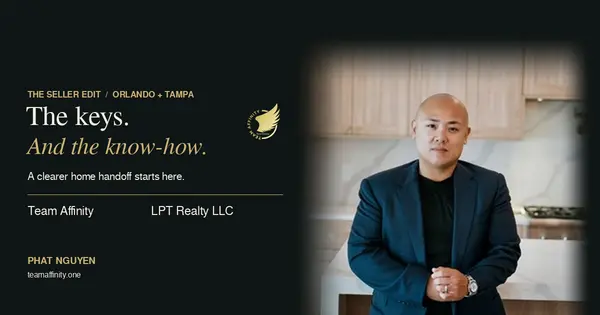
This type of note allows any future follow-up to feel personal. It also helps a team serve clients more consistently. If Phat Nguyen is helping an Orlando buyer and Julie Phan is supporting a Tampa question, clear notes protect the client experience and reduce confusion.
Use bilingual service as a communication advantage
Bilingual follow-up should be clear, warm, and practical. It should not stereotype the client or assume what they want. Instead, offer language support as a service option. For example: “If it helps, we can explain the buying steps in Vietnamese or English.” That phrasing is respectful and client-centered.
For Team Affinity, the phrase Vietnamese Real Estate Agent in Orlando & Tampa belongs naturally in the brand conversation because many clients are looking for patient, bilingual real estate guidance. The value is not only translation. The value is helping people understand contracts, timelines, inspections, showings, and next steps in plain language while staying within the proper professional role.
Weekly follow-up rhythm for busy agents
A simple weekly rhythm can keep the business moving:
- Monday: review active buyers, sellers, and hot conversations; confirm next steps.
- Tuesday: call or text new leads from the prior week with a helpful resource.
- Wednesday: send nurture messages to future-timeline buyers and sellers.
- Thursday: connect with past clients, referral partners, and local business relationships.
- Friday: clean up notes, set next action dates, and identify weekend open house opportunities.
The exact days can change, but the principle should not: follow-up needs a calendar slot. If it only happens when everything else is done, it will not happen often enough.
Measure behavior, not just closings
Closings matter, but they are lagging indicators. Agents should also track controllable behaviors: number of meaningful conversations, appointments set, database updates completed, past-client touches, open house follow-ups, and referral requests made professionally. These numbers show whether the business is being built before the closing statement appears.
Avoid making income promises to yourself or to recruits. Real estate results vary by market, skill, time, inventory, pricing, client needs, and many other factors. A good system improves consistency, but it does not guarantee a specific sale, commission, or conversion rate.
Vietnamese business tip | Mẹo kinh doanh bằng tiếng Việt
Tiếng Việt đơn giản: Theo dõi khách hàng không phải là “làm phiền.” Nếu mình gửi thông tin đúng lúc, nói chuyện lịch sự, và giúp khách hiểu bước kế tiếp, đó là phục vụ tốt. Mỗi khách nên có ghi chú rõ ràng: họ cần gì, khi nào cần, muốn nói tiếng Anh hay tiếng Việt, và bước kế tiếp là gì.
Sources and professional reminders
- National Association of REALTORS® — Fair Housing resources: https://www.nar.realtor/fair-housing
- Federal Trade Commission — CAN-SPAM Act compliance guide for commercial email: https://www.ftc.gov/business-guidance/resources/can-spam-act-compliance-guide-business
- National Association of REALTORS® — Code of Ethics: https://www.nar.realtor/about-nar/governing-documents/code-of-ethics
FAQ: Real estate follow-up systems
How fast should a real estate agent follow up with a new lead?
As soon as reasonably possible. Speed helps, but the message still needs to be relevant and professional. A fast generic message is weaker than a quick message that answers the actual question.
What should I say if a lead says they are “just looking”?
Respect the answer and offer one useful next step. For example, ask whether they want listing updates, a buyer checklist, or a quick explanation of the process. Do not pressure them into a timeline they have not chosen.
How often should agents follow up with nurture leads?
It depends on the person’s timeline and consent. A future buyer or seller may need monthly or quarterly value-based check-ins, while an active client may need communication several times per week. Document preferences and follow applicable rules.
Can bilingual follow-up help real estate agents serve clients better?
Yes, when it is offered respectfully. Bilingual communication can help clients understand real estate steps more clearly, but agents should avoid assumptions and simply offer language support as an option.
What is the biggest follow-up mistake newer agents make?
Relying on memory. If a contact does not have a next action date and a useful note, the agent is likely to lose track when the week gets busy.
Build the system before you need the deal
A strong real estate business is built in the quiet follow-up moments: the call after the open house, the note after the buyer consultation, the seller check-in three months before listing, and the past-client message when there is no immediate transaction. If you want to build a more consistent real estate business in Orlando, Tampa, or across Florida, Team Affinity can help you think through the systems, habits, and client communication that support long-term growth.
For agent development, Orlando questions, or Tampa real estate guidance, contact Team Affinity - LPT Realty LLC at info@teamaffinity.one. Orlando – Phat Nguyen: 407.502.4909. Tampa – Julie Phan: 813.295.7424.
Team Affinity also serves consumers looking for bilingual support from a Vietnamese-speaking Realtor in Orlando.
This article is for general educational purposes only and should not be considered legal, tax, mortgage, financial, or business-income advice. Always consult the appropriate licensed professional and your brokerage leadership for your specific situation.
Categories
- All Blogs (96)
- Agent Development (14)
- Community Spotlight (9)
- First-Time Buyers (20)
- Local Guides (5)
- Market Updates (2)
- New Construction (1)
- Orlando Local Spotlight (4)
- Orlando Real Estate (50)
- Real Estate Business (12)
- Relocation to Florida (6)
- Selling Your Home (6)
- Tampa Real Estate (47)
- Team Affinity (20)
- Vietnamese Community (7)
- Vietnamese Homebuyer Guide (7)
Recent Posts